



Serving Midlands and Upstate, South Carolina

PHD in Customer Care

Professional • Honest • Dependable

1850+ Reviews
4.9 Rating

Serving Midlands and Upstate, South Carolina

Satisfaction Guaranteed • PHD in Customer Care

Mole & Vole Control

Mole and vole control for Midlands lawns and gardens. These are two completely different animals with two different treatments, and getting the identification wrong is the most common reason the problem never goes away.

IDENTIFY FIRST, TREAT SECOND

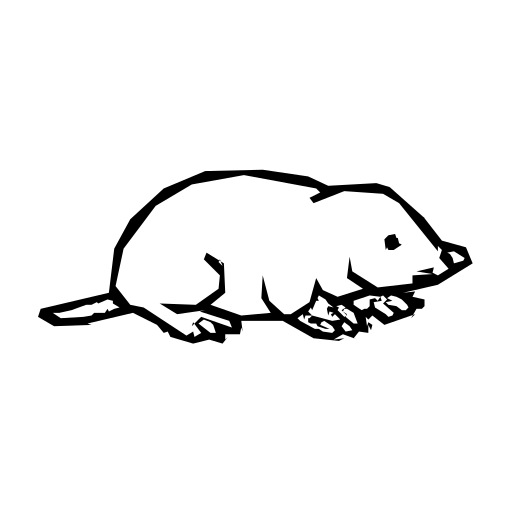
Moles are insectivores. They eat earthworms and grubs, not plants, and they tunnel below the surface leaving raised ridges and volcano-shaped mounds of soil. The damage is structural to the lawn rather than to the plants themselves.

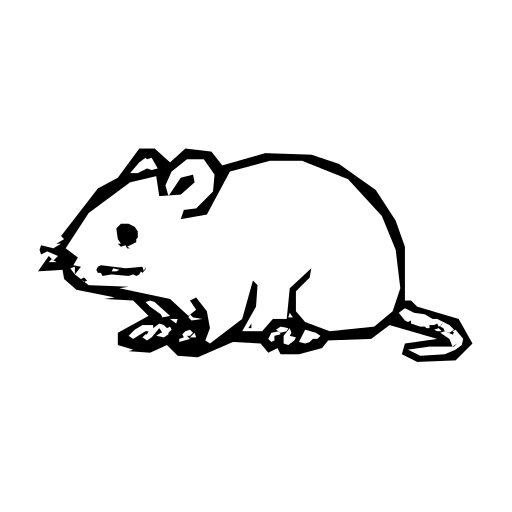
Voles are rodents. They are herbivores, they eat roots, bulbs and bark, and they leave narrow surface runways in the grass. A vole will girdle a young tree at the base and kill it outright. Treating one as if it were the other wastes a season.

READY TO STOP MOLES & VOLES?
70+

Years of Local Service

local & Family-Owned Since 1955

Why Choose
Modern Exterminating?

Modern Exterminating has been the longest-standing, local and family-owned pest control company serving the area since 1955. Now in its third generation, the company runs by a simple standard, a PHD in customer care: professional, honest, and dependable, on every visit.

  • Local and family owned since 1955
  • Satisfaction guaranteed on every service
  • Same-day appointments and services available
  • Highly trained, certified technicians
  • Deeply involved in the communities we serve

HOW MOLE AND VOLE CONTROL WORKS

Confirm which animal it is from the evidence on the ground, find the active runs, treat accordingly, then remove what attracted them.

1

Inspect & Identify

We read the signs: raised ridges and soil mounds point to moles, surface runways and gnawed bark point to voles.

2

Build the Right Plan

The plan follows the species. Mole work concentrates on active tunnels, vole work on runways, harborage and protecting plants.

3

Treat with Purpose

Trapping placed in genuinely active runs, which is why we check activity first rather than treating every tunnel we find.

4

Prevent & Follow Up

Habitat correction: mulch pulled back, ground cover reduced, and tree guards where voles have been working the bark.

NEED MOLE OR VOLE CONTROL?

TUNNELS IN
YOUR LAWN?

Prefer to call?
SATISFACTION GUARANTEED

Modern stands behind its pest control work. If a problem comes back within a reasonable time after service, contact our team and we’ll help address it according to the service plan.

WHAT TO KNOW ABOUT MOLES AND VOLES

Quick answers on telling them apart, what actually works, and the grub myth.

How do I tell them apart?

Moles leave raised tunnel ridges and cone-shaped soil mounds. Voles leave narrow runways in the grass surface and gnaw marks on stems and bark.

Will grub control get rid of moles?

Usually not on its own. Earthworms are the larger part of a mole diet, so removing grubs alone rarely moves them. It helps, but it is not the answer by itself.
What are voles doing to my plants?

Eating roots and bulbs, and stripping bark at the base of young trees and shrubs. A girdled trunk kills the plant even though nothing above ground was touched.

Do repellents work?

Ultrasonic devices and home remedies do not hold up in practice. Trapping in active runs, combined with changing the habitat, is what actually reduces the population.


Mole and Vole Control for South Carolina Lawns

Moles follow food. Irrigated lawns hold moisture, moisture holds earthworms, and a well-watered lawn in the Midlands is more attractive than the dry ground around it. That is why the tidiest lawn on the street is often the one with tunnels across it.

Voles follow cover. Thick mulch against trunks, dense ground cover, tall grass at the edges and unmown areas give them the protection they need to feed. Take the cover away and the population has nowhere to work from.

Help Keep Moles and Voles Out

Most of the lasting improvement comes from the habitat, not the treatment.

  • Pull mulch back several inches from trunks and stems.
  • Keep grass cut and clear tall growth along fences and beds.
  • Reduce dense ground cover where voles are active.
  • Fit guards around young trees to stop bark stripping.
  • Avoid overwatering, which concentrates earthworms near the surface.
  • Treat lawn grubs where they are genuinely heavy, as part of a plan rather than as the whole plan.

Flattening tunnels tells you which runs are still in use. The ones that reappear overnight are the active ones, and those are the only ones worth treating.

Frequently Asked Mole and Vole Questions

Because treatment was placed in runs that were no longer active, or because the food and cover that attracted them is still there. We check activity before placing anything.

Mole damage is mostly cosmetic and the lawn recovers once the tunnelling stops. Vole damage can be permanent where a tree or shrub has been girdled, which is why bark damage is worth acting on quickly.

Appointment length depends on the treatment and property. Our team will explain what to expect, provide an arrival window, and call on the way.

Modern uses low-toxicity, professional products and follows service-specific safety requirements. Some treatments require people or pets to stay out of treated areas until the materials are dry or for a specified period.